

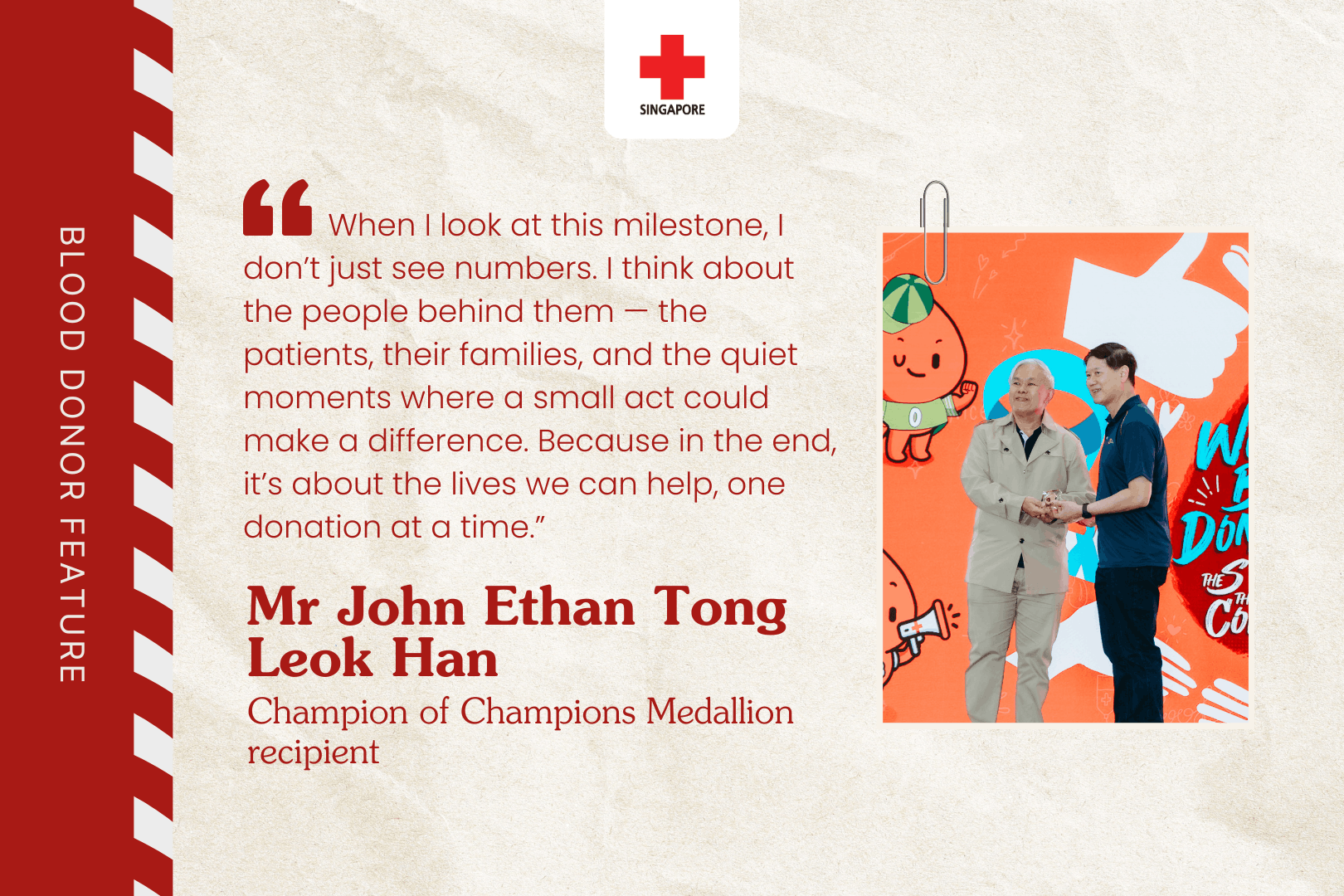
For over three decades, Mr John Ethan Tong Leok Han planned his schedule around his donation dates because of one belief: that even a small act of giving can become part of someone’s fight for life.
More than 30 years ago, Mr John Ethan Tong Leok Han walked into his first blood donation appointment with uncertainty and a list of questions lingering in the back of his mind.
How much blood would be drawn? How would he feel after losing that amount of blood? What happens to the blood after he donates it? There was a lot he did not know.
But beneath the hesitation, one thought anchored his decision to take the first step: whatever uncertainty he felt was insignificant compared to what someone in need of blood might be going through.
“Blood cannot be manufactured — it has to come from people. If someone needed help and I was able to give, then it felt less like a choice and more like a responsibility.”
That decision and quiet sense of responsibility would eventually shape decades of donation, including his transition from whole blood to apheresis donation.
A Step Worth Taking
It was during one of his regular donations that John learned about apheresis donation. What caught his attention was the short shelf life of platelets — only seven days — so there is always a constant and urgent need for donors.
Although apheresis donation takes nearly three times as long as whole blood donation, it can be done every 28 days instead of quarterly. Rather than a burden, knowing it could directly support patients battling cancer and other critical illnesses makes the extra time and commitment feels worthwhile.
“Donating blood made me realise how fragile life can be — and how much people depended on it. If I have the ability to give more time, donate more regularly, and potentially help more people in critical conditions, then it’s a step worth taking.”
A Perfect Match
In 2015, John received a call from the hospital requesting HLA-matched platelets for a cancer patient who was not responding well to normal platelet transfusions. The doctors had identified his platelet type was a match for the patient.
He was contacted again in the following months after doctors found that the patient responded positively to his donations.
“For the first time, I wasn’t just donating and hoping it helped — I knew it did.”
Although he never met the patient, this experience left a lasting impression on him. Beyond just a routine, moments like this reminds him that being able to give is both a responsibility and a privilege.
The Journey Continues
Receiving the Champion of Champions Award for his 155th donation this year feels deeply personal for the 57-year-old.
“When I look at this milestone, I don’t just see numbers. I think about the people behind them — the patients, their families, and the quiet moments where a small act could make a difference. Because in the end, it’s about the lives we can help, one donation at a time.”
If anything, this award is not the finish line, but a reminder to stay committed and to encourage others to take that first step.