

As dengue continues to pose a persistent and evolving threat across Asia, strengthening outbreak preparedness has become increasingly important. Shifts in climate, urbanisation, and transmission patterns are making outbreaks harder to predict and manage.
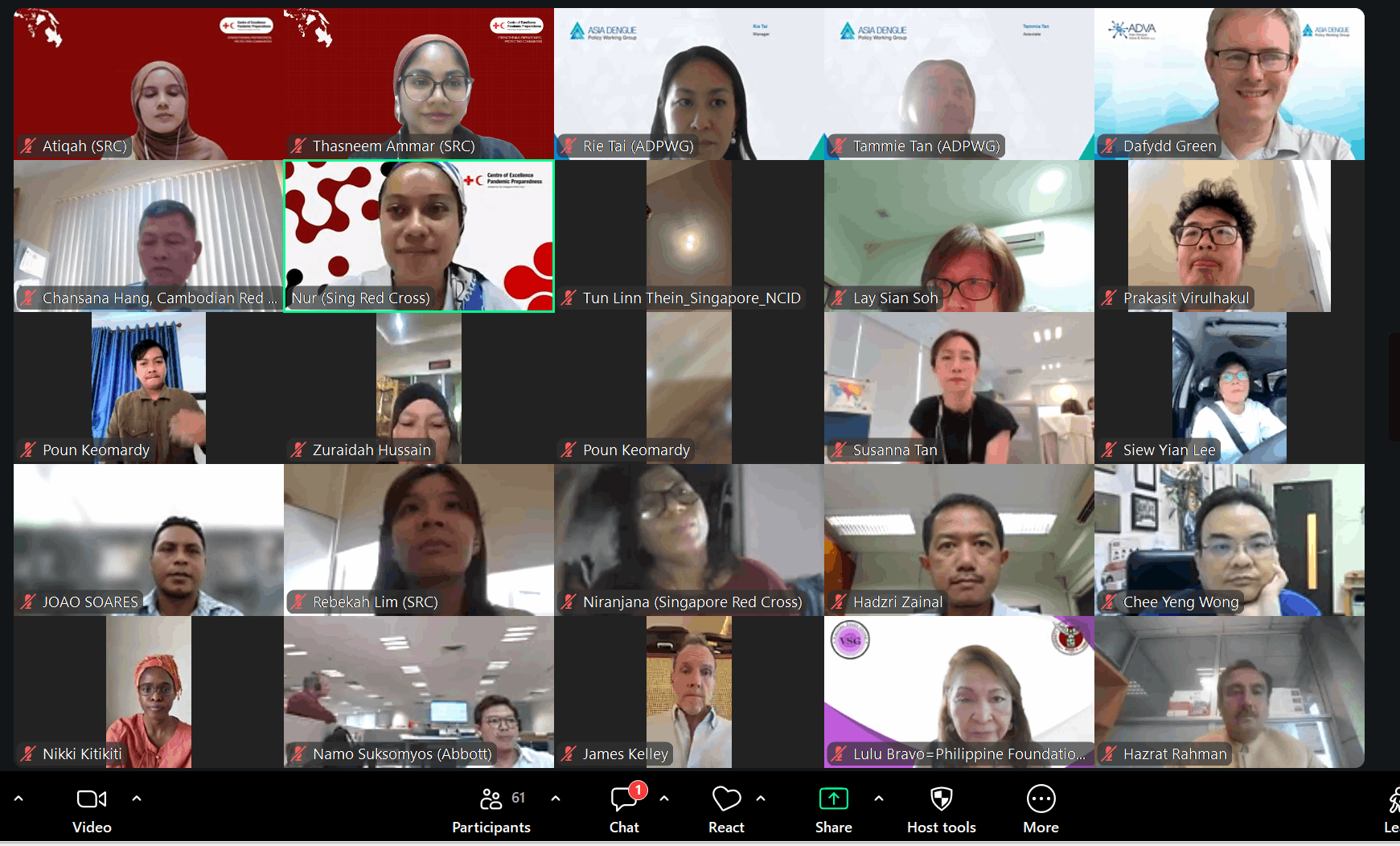
To better understand these changes, the Singapore Red Cross’ Centre of Excellence for Pandemic Preparedness (CoEPP), co-organised the United Against Dengue webinar with the Asia Dengue Voice and Action Group (ADVA). The session brought together regional experts, practitioners, and National Societies to exchange insights on dengue prevention and control.
Discussions highlighted key challenges across surveillance, clinical management, vector control, vaccines, and community engagement. In particular, gaps in early warning systems and delayed detection continue to limit timely outbreak response, while evolving environmental conditions are reshaping transmission patterns.
Country case studies demonstrated how different contexts are adapting their approaches. Sri Lanka shared its use of Mo-Buzz, a mobile-based participatory surveillance system that supports real-time reporting. Singapore highlighted Gravitraps to monitor mosquito populations and guide targeted interventions. Indonesia’s East Kalimantan showcased its school-based dengue vaccination rollout, while Malaysia shared its COMBI and Gotong-Royong initiatives, emphasising sustained community mobilisation.
Frontline perspectives from Timor-Leste Red Cross (CVTL) further illustrated response efforts following the 2026 dengue outbreak. Operating across all municipalities, CVTL shared its work in community awareness, vector control activities, and basic clinical and support services in high-burden settings.
Across the session, a clear message emerged: there is no one-size-fits-all solution. Strengthening surveillance, enabling earlier diagnosis, adapting vector control strategies, and sustaining community engagement will be critical. At the same time, vaccines and innovations show promise but require stronger implementation readiness and equitable access.
Through CoEPP, SRC continues to support regional collaboration and knowledge exchange to strengthen outbreak preparedness. As dengue risks evolve, sustained partnerships and shared learning will be key to building more resilient communities across Asia.